
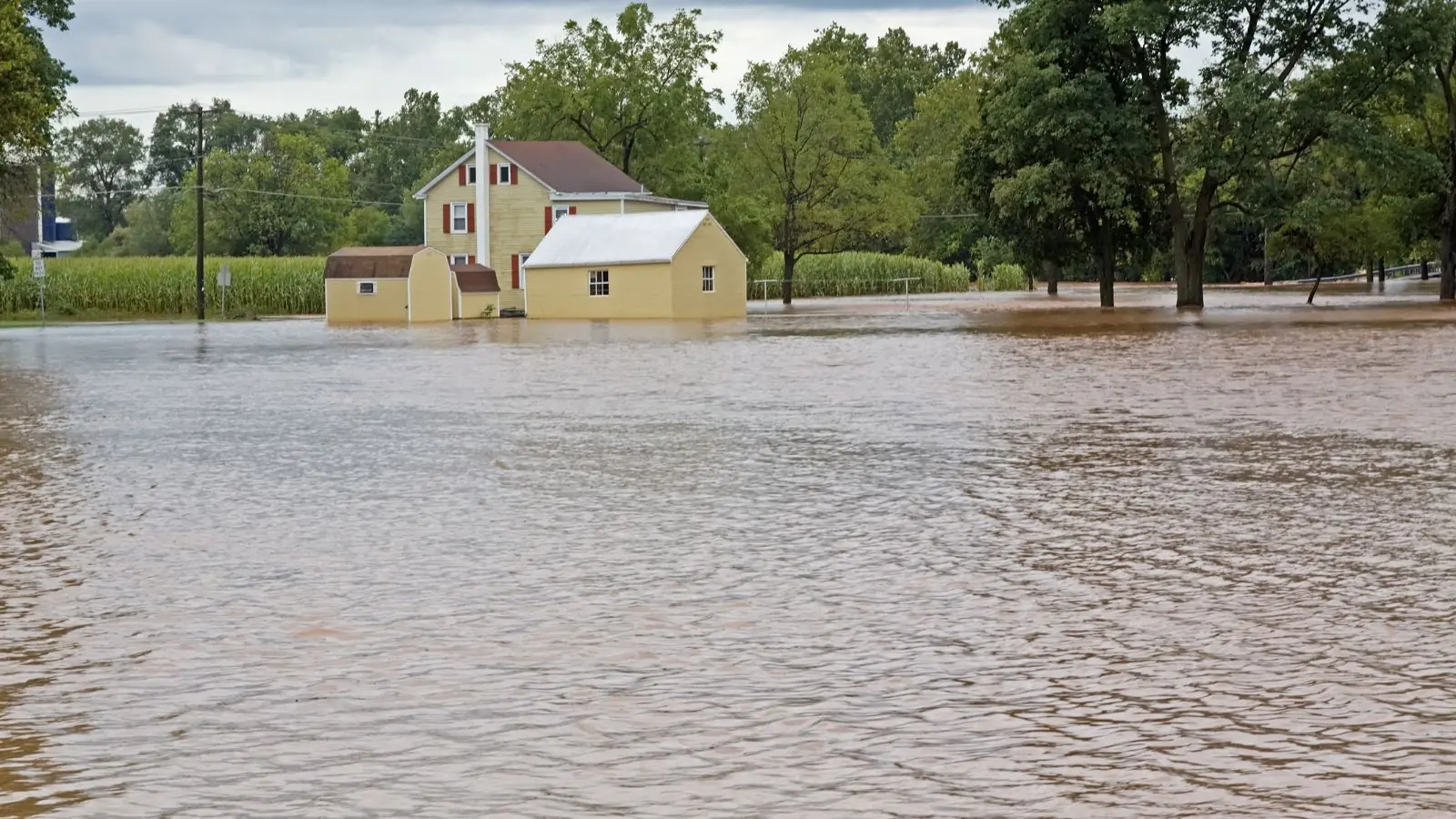
Why preparation is about water
Wind gets the headlines. Water does most of the lasting damage to homes. It enters where wind opens a path, pools where drainage is blocked and rises where the ground is already full. Nearly every item on this list is about keeping water out or limiting what it ruins.
The Atlantic hurricane season runs from June 1 through November 30. The steps below are grouped by how far ahead you should do them.
A month or more ahead
Roof. Have a roofer look for lifted shingles, worn flashing and cracked vent boots. Small defects are where wind-driven rain gets in.
Gutters and downspouts. Clean them and make sure downspouts send water away from the foundation.
Trees. Trim limbs that overhang the roof.
Windows and doors. Check sealant and weatherstripping. Water stains on a sill mean the seal has already failed once.
Insurance. Read your policy. Confirm whether you have flood coverage and what your hurricane deductible is. New flood policies often have a waiting period before they take effect, so this cannot be left to the week of a storm.
Inventory. Walk through the house with your phone and record every room, closet and the garage. Store the video online.
Water got in during the storm? Call when it is safe and tell us which rooms are wet.
☎ (833) 521-1033A week ahead, when a storm is forecast
- Clear yard drains, swales and the street gutter in front of your house.
- Test any sump pump and its backup power.
- Move valuables and documents off the floor and away from windows.
- Photograph the outside of the house, including the roof from the ground.
- Refill prescriptions, charge batteries and fuel vehicles.
- Know where your main water valve and breaker panel are.
The day before
Bring in or tie down anything loose outdoors. Put towels and plastic at door thresholds that have leaked before. Set your refrigerator and freezer colder. Move vehicles to higher ground if your street floods.
If you are leaving, shut the main water valve and switch off the water heater. A pipe that breaks in an empty house during a storm can do more damage than the storm.
During the storm
Stay inside and away from windows. If water starts coming through a ceiling, put a bucket under it and move out from below. Do not go into an attic or onto a roof. If water rises in the house, move to a higher level, and do not touch electrical equipment while standing in water.
After it passes
| What you find | What to do first | Where to read more |
|---|---|---|
| Roof damage and wet ceilings | Photograph, cover from inside if safe, call a roofer | Ceiling water damage repair |
| Rain through windows or walls | Photograph, move contents, start drying | Storm water damage cleanup |
| Water that rose from the ground | Stay out until power is confirmed off | Flood damage cleanup |
| No visible water | Check attic, closets and under sinks within a day | Look again in three days |
Report damage to your insurer promptly, and keep receipts for emergency work.
Local note for DeBary homeowners
DeBary's storm record explains the priorities above. The National Weather Service summary for Hurricane Milton in 2024 lists 14.98 inches of rain at a gauge near DeBary, one of the highest totals in its report. After Hurricane Ian in 2022, the St. Johns River set a record at the DeLand gauge.
The City of DeBary's planning data describes two kinds of floodplain: along the river, and around the small closed-basin lakes in the eastern part of the city, where water has no natural outlet. The city's 2025 flooding vulnerability assessment names East Highbanks Road, DeBary Plantation, Swallows, Kings Lake, Terra Alta and other areas. In 2025 Volusia County approved 8.6 million dollars toward a drainage project on West Highbanks Road, according to local news reporting.
What to do with that: find your address on the FEMA Flood Map Service Center, ask neighbors how your street behaved in 2022 and 2024, and decide about flood coverage well before the season. Volusia County's emergency management pages carry local flood risk and evacuation information.
The same advice holds across the river in Sanford, where Lake Monroe rises with the St. Johns, and in Longwood.
A note on manufactured homes
Check tie-downs and skirting before the season. After a storm, look under the home for sagging underbelly material, which can mean water is trapped in the insulation.
The one-page version
- Roof, gutters and trees checked.
- Policy read, flood coverage decided.
- Video inventory stored online.
- Drains cleared.
- Valuables raised.
- Main valve and panel located.
- Water and water heater off if you leave.
Questions and answers
When should I buy flood insurance?
Well before a storm is forecast. Policies often have a waiting period. Ask an agent about current rules.
Do sandbags work?
They can slow shallow water at a doorway. They do not stop groundwater rising through a slab or prolonged flooding.
Which DeBary areas should pay closest attention to flood risk?
The city's 2025 assessment lists several, including East Highbanks Road, DeBary Plantation and Terra Alta. Check the FEMA map for your own address.
What is the first thing to do if water gets in?
Make it safe, photograph it and get standing water out as soon as conditions allow.