
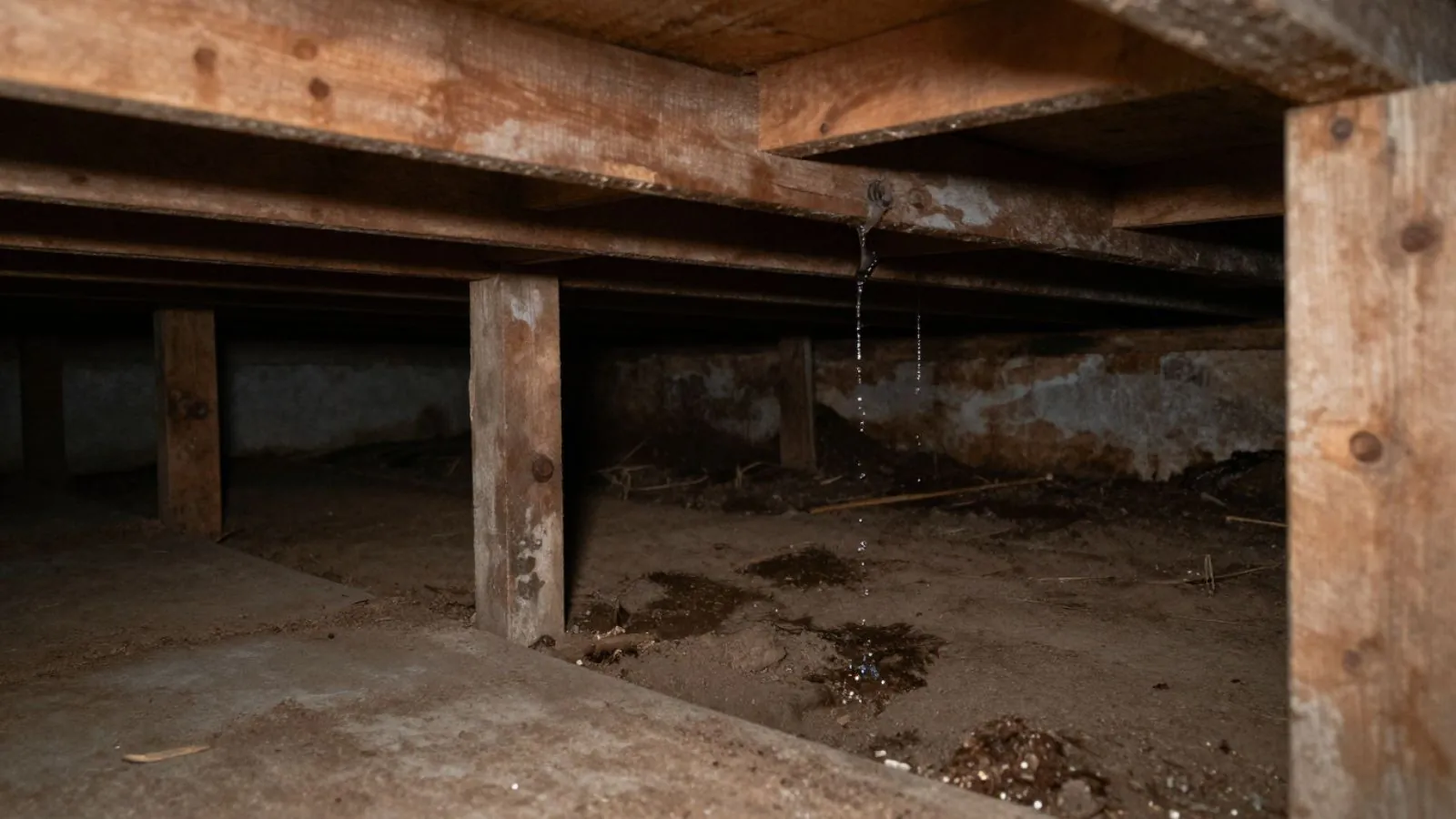
What crawl space water damage is
Crawl space water damage is moisture damage in the open area between the ground and the floor of a raised home: wet soil, standing water, soaked insulation and damp floor joists. You usually notice it from above, as floors that feel soft or cold, a musty smell, or cupped boards.
The crawl space matters because the floor of your house is its ceiling. Wood that stays damp loses strength and grows mold, and the air under the house moves up into the rooms.
Raised floors in DeBary
Most people picture an old pier-and-beam house. In DeBary the larger group is manufactured housing. Census figures in the city's planning data count 1,024 mobile homes, about 10 percent of all housing units, across five developments with 1,080 spaces. Those homes sit above a skirted underfloor space with supply lines, drain lines and a belly wrap holding insulation.
That design means a small plumbing leak can fill the belly insulation with water before a drop reaches the ground. The city's 2025 flooding vulnerability assessment also names Terra Alta and Kings Lake, two of those communities, among areas exposed to flooding. FEMA's Flood Map Service Center shows the mapped zone for any single address.
Spongy floors or a musty smell coming up from below? Call and describe what you see at the access door.
☎ (833) 521-1033Where the water comes from
Plumbing above
A supply or drain line under the floor leaks straight into insulation and onto the soil.
Irrigation and backflow
A failed backflow assembly or broken sprinkler line next to the house sends water under the skirting.
Surface water
Rain runs toward the house and under it when the ground slopes the wrong way.
Ground water
After long rain a high water table can rise into the space from below.
What you notice and what it usually means
| Sign in the house | Likely condition below | Next step |
|---|---|---|
| Floor feels spongy in one area | Wet subfloor or joist near a leak | Moisture check from below |
| Musty smell, stronger in humid weather | Damp soil, wet insulation | Inspection, possible mold check |
| Cupped wood floor boards | Moisture rising from underneath | See hardwood floor water damage |
| Sagging belly wrap under a manufactured home | Insulation holding water | Open, drain, remove and dry |
How the cleanup is done
Standing water is pumped out. Wet insulation is removed, bagged and hauled away, because it cannot be dried in place and holds water against the wood. Under a manufactured home the belly wrap is opened in the wet area so trapped water can drain.
Joists, beams and subfloor are metered. Air movers and dehumidifiers are set to move dry air through the space, with the access points sealed around ducting so the equipment dries the crawl space and not the whole neighborhood. This is structural drying in a tight space, and readings are logged until the wood is back to normal moisture content.
If growth is found on the framing, it is treated under our mold remediation process before new insulation goes in.
What we do not do
We clean up and dry. Regrading, French drains, vapor barrier systems and permanent crawl space dehumidifiers are the work of a drainage or encapsulation contractor. If repeated water entry is the cause, we will tell you so you can fix the source.
Cost factors
- Access. Low clearance and small openings slow everything down.
- Standing water. Whether pumping is needed before work can begin.
- Insulation. How many square feet come out and go back.
- Water type. Clean supply water versus ground water or a drain leak.
- Drying days. Thick framing lumber dries slowly.
Sudden plumbing leaks are often covered, and ground water usually is not under a standard policy. Coverage for manufactured homes varies by policy type. Check your policy and confirm with your insurer. To price work under your floor, call (833) 521-1033. We tell you what comes out, what is dried and what it costs first.
Service area
Call any hour about a wet underfloor space in DeBary, Orange City, Sanford, Lake Mary or Longwood. The technicians are licensed and insured, and framing is dried to S500.
Questions and answers
Is water in a crawl space an emergency?
Standing water from an active pipe leak is urgent: shut the water off and call. Dampness after rain is less urgent but should be checked within days, before wood and insulation stay wet.
Do you work under manufactured homes?
Yes. We open the belly wrap where it is holding water, remove wet insulation and dry the floor system.
An irrigation backflow flooded under my house. Is that covered?
It depends on your policy and the cause. Photograph the failed part and the water, and ask your insurer.
Can I just put a fan at the access door?
A fan moves humid outdoor air through the space and often makes it wetter. Drying needs dehumidified air and a measured plan.