
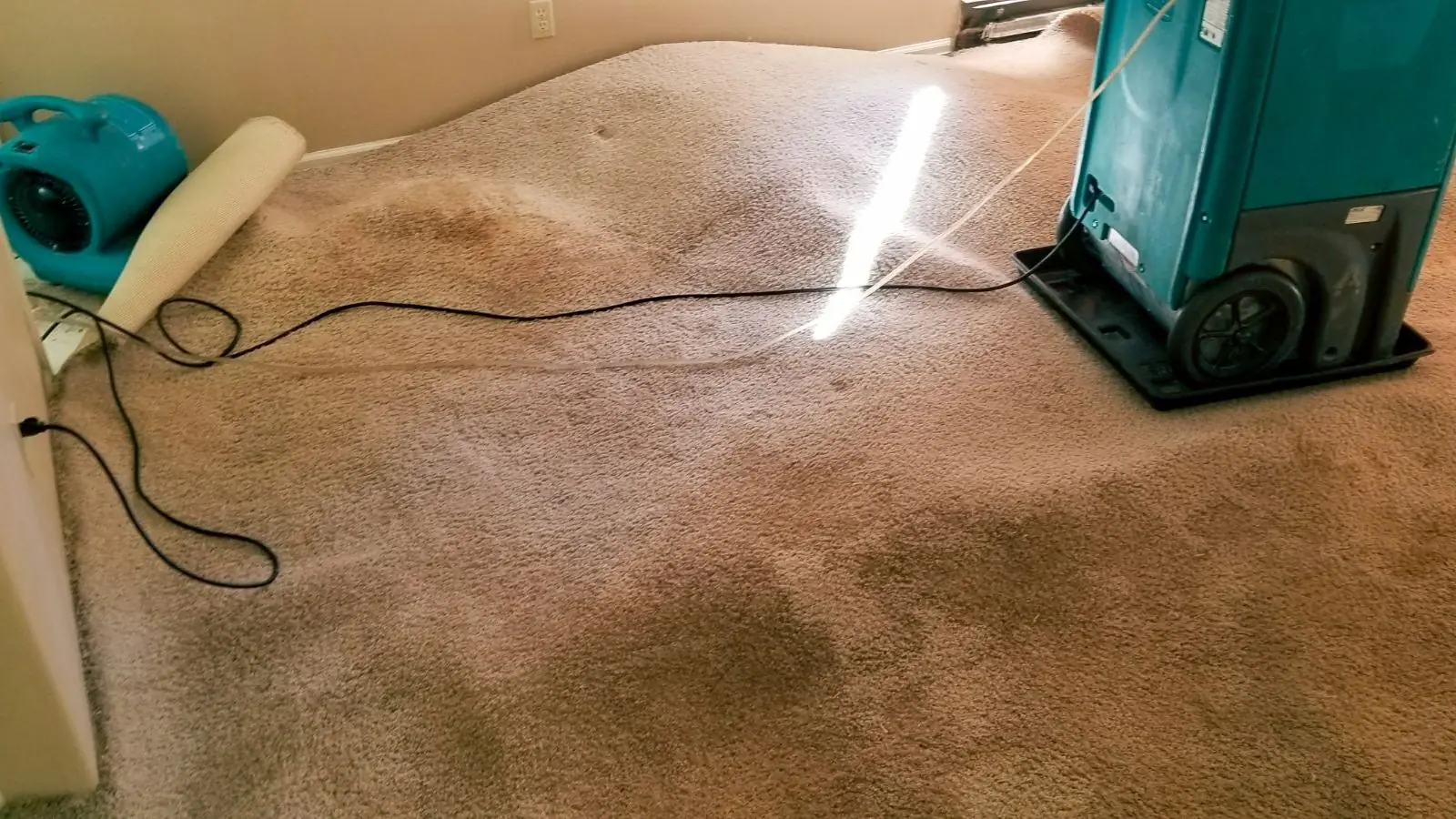
Water in a below-grade room is an emergency
Basement water damage cleanup is the pumping, drying and cleaning of any room that sits partly or fully below ground level. Water runs downhill, so the bottom room in a building collects whatever leaks above it and whatever pushes in from the soil. If your lower level is taking water now, the line is answered 24/7.
Do not walk into standing water if outlets, a furnace, a water heater or a freezer are down there. Shut off power to that level from a dry panel if you can, and keep everyone out until it is confirmed off.
Gas appliances that have been under water are a hazard. If you smell gas, leave and call the gas utility or 911 before anything else.
Basements in DeBary: the honest picture
Full basements are not a typical feature of Central Florida construction, and DeBary's planning data explains part of the reason: poorly drained soils with high water tables are listed among the city's main building constraints. Digging a room into wet ground invites water.
Below-grade space does exist here in other forms. Think of a walk-out lower level on a sloped lakefront lot, a sunken living room, a split-level, a commercial building with a mechanical pit or a storm shelter. This page is written for those, and for the mechanism: what to do when the bottom level is wet.
Water in a lower level, sunken room or walk-out basement? Call and tell us how it got in.
☎ (833) 521-1033Four ways water gets into a lower level
| Route | What you see | What it means |
|---|---|---|
| Through the walls after rain | Damp streaks, water at the wall and floor joint | Ground water pressure, a drainage and waterproofing matter |
| Up through the floor | Water at cracks or the floor drain | High water table or a failed sump pump |
| From a floor drain or toilet | Dirty water, odor | Sewer backup, see sewage backup cleanup |
| From above | Stain on the ceiling, water down the stairs | A plumbing or appliance leak upstairs |
What cleanup involves
Water is pumped out with a submersible pump and the remainder removed by extraction. Contents are carried out and sorted into keep, clean and discard. Finished basements lose the most: carpet and pad, the lower part of the drywall and any wet insulation are usually removed.
Concrete walls and floors are cleaned. Then air movers and LGR dehumidifiers run, often longer than on an upper floor, because below-grade rooms have cool walls and little natural airflow. Readings are logged until framing and concrete return to normal. A flooded lower level that already smells musty gets a check for growth under mold remediation.
Restoration is not waterproofing
Callers sometimes ask us to find the cracks, seal the walls or replace a sump pump. We need to be plain about this. We remove water, dry the structure and repair the finishes. Waterproofing, foundation inspection and sump pump replacement belong to a waterproofing or foundation contractor.
We will tell you what we saw, such as where the water entered and how high it reached, so you can pass it on to that contractor. Drying a basement without fixing the entry point means it will get wet again.
Rain, ground water and the St. Johns
During Hurricane Milton in 2024 a gauge near DeBary recorded 14.98 inches of rain, according to the National Weather Service. When that much water soaks into ground that already drains poorly, anything below grade is under pressure from outside. If the water in your lower level rose from the ground during a storm, it is handled as flood water under our flood damage cleanup process.
Cost factors
- Depth of water. Inches versus feet changes pumping and demolition.
- Finished or unfinished. Drywall, carpet and trim add removal and rebuild.
- Water source. Clean pipe water costs less to handle than ground or sewer water.
- Contents. How much has to be moved, cleaned or hauled away.
- Drying time. Below-grade rooms take more equipment days.
Coverage depends on the source. A burst pipe is often covered, while ground water seepage and flood usually are not under a standard homeowners policy. Read your policy, and ask your insurer about anything unclear. For a price on your lower level, call (833) 521-1033. Pumping, removal and drying are explained before any of it starts.
Service area
Lower-level cleanups are handled in DeBary, Orange City, Sanford, Lake Mary and Longwood by licensed and insured crews who follow S500.
Questions and answers
Do you handle basement water damage emergencies at night or on weekends in DeBary?
Yes. Lower-level flooding is taken 24/7. Tell us the depth, whether power is on down there and where the water seems to be coming from.
Do you waterproof basements or replace sump pumps?
No. That is a waterproofing contractor's work. We clean up and dry after the water gets in.
My lower level is flooded and already moldy. Where do you start?
With pumping and removal of wet materials, done under containment where growth is visible. Drying follows.
Are there many basements in DeBary?
Not many. The local water table makes them unusual. Sunken rooms, walk-out levels and commercial pits are the more common below-grade spaces here.