
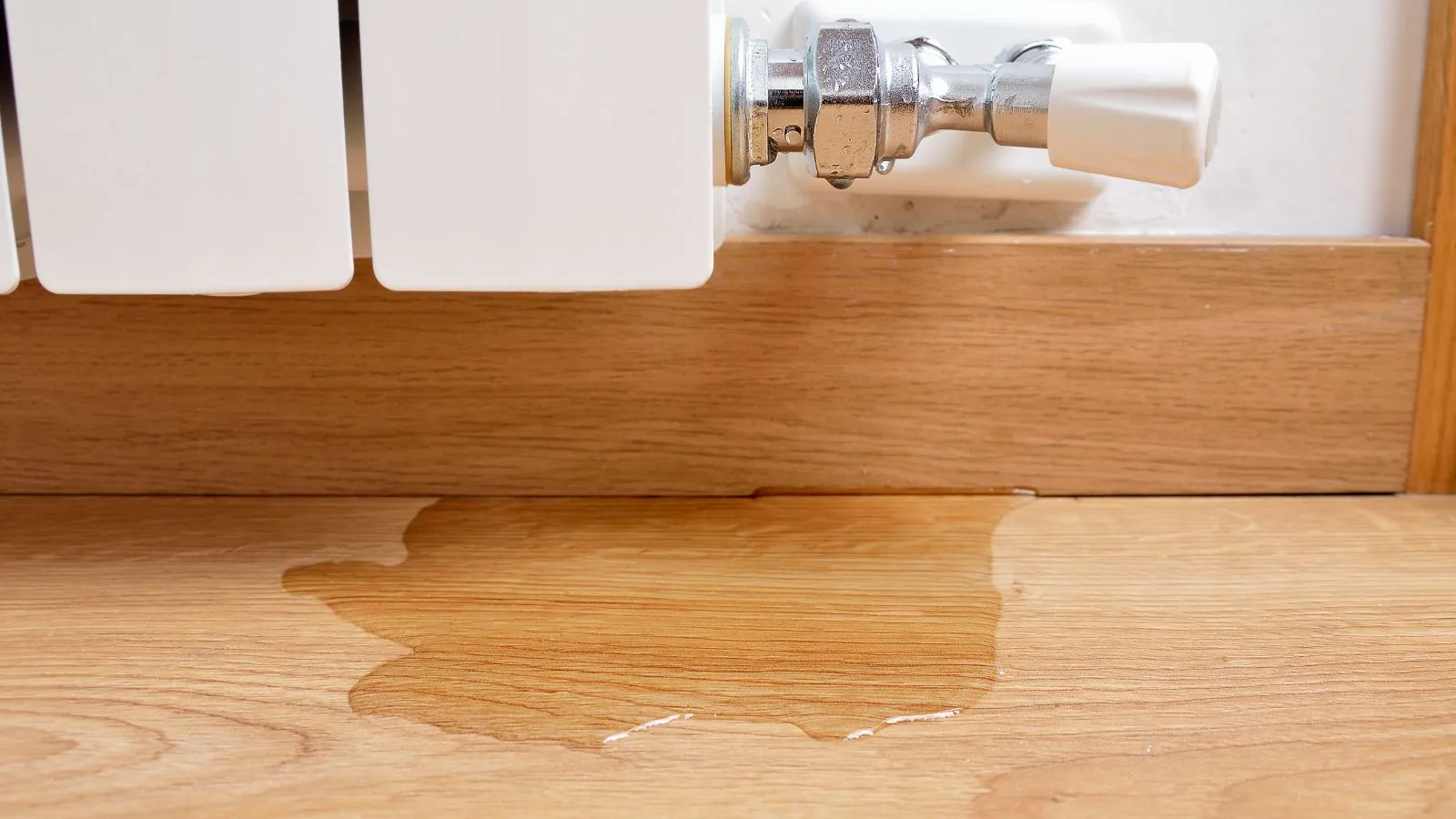
What hardwood floor water damage is
Hardwood floor water damage is the swelling, cupping, crowning, staining or buckling that happens when wood flooring absorbs water from above or from the subfloor below. This page also covers engineered wood and laminate, because people search for them together even though they behave very differently.
The key idea: wood moves with moisture. A board that has cupped is a wet board. Many cupped floors flatten once they are dried properly, which is why the first job is drying and the decision about refinishing comes later.
Reading the floor
| What you see | What it means | Usual outcome |
|---|---|---|
| Cupping: board edges higher than centers | Moisture from below or within | Often recoverable with drying |
| Crowning: centers higher than edges | Wet top surface, or sanded while cupped | May need refinishing |
| Dark stains along seams | Water sat in the joints | Stain may remain, board may be replaced |
| Buckling: boards lifting off the subfloor | Severe swelling | Section replaced |
| Laminate edges swollen and peaking | Core has absorbed water | Replaced, it does not shrink back |
Wood floor wet from a washer valve, dishwasher or AC line? Call and tell us how long it was wet.
☎ (833) 521-1033Where the water usually comes from
The causes callers describe are ordinary. A washing machine valve fails and runs unnoticed. A dishwasher leaks under the adjoining floor. An air conditioning condensate line backs up and wets the boards near the air handler. A refrigerator line drips behind the kitchen.
Each of those sources has its own page: see appliance leak water damage and AC leak water damage. This page picks up at the floor itself.
How wood floors are dried
Surface water is extracted right away. Then the floor is metered, board by board in the wet zone, along with the subfloor wherever it can be reached. Readings are compared with a dry area of the same floor.
Drying mats are sealed to the floor surface and connected to a vacuum system that pulls moisture up through the boards. Dehumidifiers keep the room air dry so the wood keeps releasing water. Where there is access from below, air is directed at the underside of the subfloor too.
Speed is controlled on purpose. Wood dried too fast can crack or check. A typical hardwood drying job runs a week or more, and readings decide when it ends. This is a specialized part of structural drying.
Do not sand a cupped floor
Sanding a floor flat while the boards are still swollen removes wood from the raised edges. When the boards finally dry and shrink, the edges end up lower than the centers, and the floor is crowned for good. Wait until moisture content has returned to normal and stabilized before anyone refinishes.
Solid, engineered or laminate
- Solid hardwood tolerates the most. It can be dried, and sanded later if needed.
- Engineered wood has a thin real-wood layer over plywood. It can sometimes be dried, but delamination means replacement.
- Laminate has a fiberboard core that swells permanently. Wet laminate is nearly always replaced.
- Glue-down floors over slab trap water under the boards and are harder to dry than nailed floors over plywood.
Wood floors and DeBary humidity
Wood flooring in Central Florida lives with humid air much of the year, so its normal moisture content is higher than the same floor would hold in a dry state. That is why we take a dry reference reading from your own floor and do not rely on a textbook number.
It also means a floor near a slab or over a damp crawl space, as described on our crawl space water damage page, can cup with no plumbing leak at all.
Cost factors
- Floor type. Solid, engineered or laminate.
- Installation. Nailed over plywood or glued to slab.
- Area and time wet. A hallway for an hour versus a great room for a weekend.
- Drying days. Mat systems run longer than standard drying.
- Refinish or replace. Decided after drying, and priced then.
Sudden leaks are often covered, and matching replacement boards to an existing floor is a frequent point of discussion with insurers. Check your policy wording, or put the question to your insurer. For a price on your wood floor, call (833) 521-1033. The drying method, the likely timeline and the cost are explained first.
Service area
Wood floor calls are answered 24/7 for DeBary, Orange City, Sanford, Lake Mary and Longwood. Floors are dried by licensed and insured technicians using S500 methods for hardwood.
Questions and answers
Is a wet hardwood floor an emergency?
Standing water on wood should be removed right away, so call quickly. Cupping that appeared over days is less urgent but still needs a moisture reading soon.
Will my cupped boards go flat again?
Often they do once the moisture is removed slowly and evenly. It can take weeks for the wood to settle after drying.
Can you dry laminate flooring?
Rarely. Once the core swells, the planks stay swollen. We remove them so the subfloor can dry.
My floor cupped but I cannot find a leak. Why?
Moisture may be coming from below, from a slab, a crawl space or an AC condensate problem. A meter and a look underneath usually find it.