
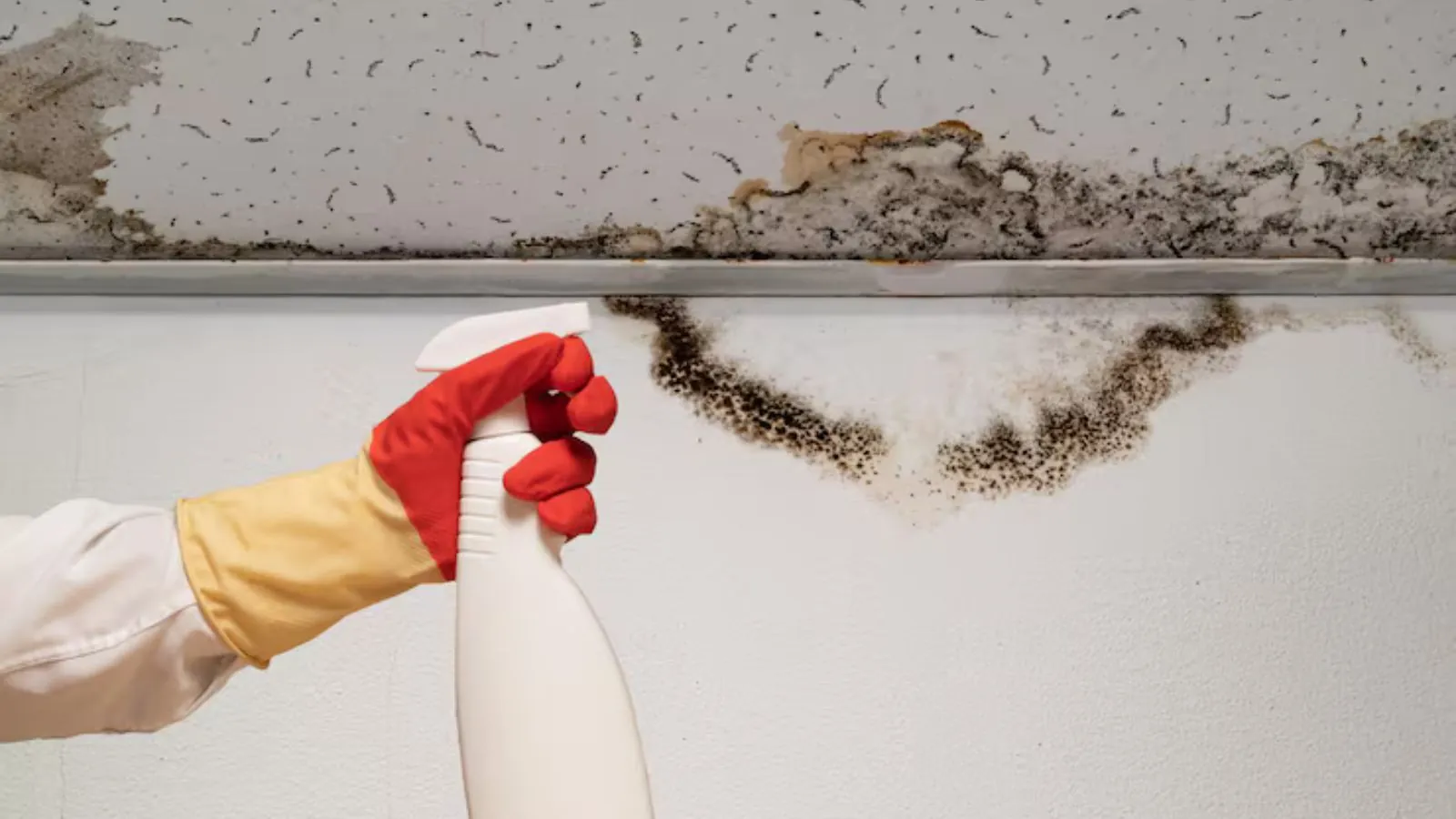
What people mean by black mold
The phrase usually refers to Stachybotrys chartarum, a dark greenish-black mold that grows on materials with a lot of cellulose, such as drywall paper and wood, when they stay wet for a long time. In everyday use, though, people apply the term to any dark mold they find.
That is the first thing to understand. Many common molds are dark. Cladosporium and Aspergillus species can look black on a wall or a window frame. You cannot identify a mold by color, and neither can a contractor standing in your hallway.
What color does and does not tell you
Color tells you growth is present and that the surface has been damp. It does not tell you the species, and it does not tell you how a particular person will react to it.
We do not make health claims, and you should be cautious of any company that does. If someone in the home has symptoms or a medical condition, take that to a doctor. From a building standpoint the approach is the same for any mold growing indoors: find the moisture, contain the area, remove the growth and dry the structure.
Seeing dark growth and not sure what it is? Call and describe the surface, the room and any past leak.
☎ (833) 521-1033Why this matters when you hire someone
Some companies use the phrase to frighten customers into a quick signature. A dark patch gets called toxic on sight, and the price reflects the fear. A sound company does the opposite. It asks about leaks, takes moisture readings and explains the work in plain terms.
Eight questions to ask a black mold removal company
- Are you licensed for this in Florida? Ask for the license number and look it up.
- Who decides the scope? For larger jobs an independent licensed mold assessor should write the protocol.
- What caused the moisture, and is it fixed? If they do not ask, that is a warning sign.
- How will you contain the work area? Listen for plastic barriers and HEPA-filtered negative air.
- What gets removed and what gets cleaned? Porous materials with growth are removed. Solid wood is usually cleaned.
- Which standard do you follow? The published reference is ANSI/IICRC S520.
- Who performs clearance? Verification is more credible when it is independent.
- What is in the written scope, and what is excluded? Get it before work starts.
Red flags and good signs
| Red flag | Good sign |
|---|---|
| Diagnoses the species by looking at it | Says identification needs a lab, and often is not needed |
| Makes health promises or warnings | Refers health questions to a physician |
| Quotes without visiting | Inspects and takes moisture readings first |
| Offers to test, remediate and clear its own work | Explains the assessor and remediator roles |
| Promises mold will never come back | Says it depends on keeping the area dry |
| Pushes for a signature today | Leaves a written scope for you to review |
Is it urgent?
Mold is rarely an emergency in the way a burst pipe is. The leak feeding it can be. If water is active, stop it and have it dried. If the growth is dry and old, you have time to choose a company carefully.
Meanwhile, do not scrub it, sand it or point a fan at it. Keep the door closed. If it is in a closet beside an air handler, have the drain line checked, since that is the usual cause covered on our AC leak water damage page.
What the removal looks like
The area is sealed off. A negative air machine pulls air through HEPA filters and exhausts it outdoors. Affected drywall, insulation or carpet is cut out, bagged and removed. Remaining surfaces are HEPA vacuumed and wiped. Damp framing is dried. Our mold remediation page describes each step.
Local note for DeBary homeowners
Florida's Department of Business and Professional Regulation licenses mold assessors and mold remediators under separate license types, and its website has a public license search. For a DeBary homeowner that is the simplest screening tool available: look the company up before the visit.
Humidity is the local backdrop. Central Florida's long humid season means indoor surfaces that stay cool or damp are at risk even without a dramatic leak. The City of DeBary's planning data also notes a high water table and poorly drained soils. Bathrooms without working exhaust fans, closets on exterior walls and rooms closed up while owners are away are the usual places dark growth appears.
We take calls from DeBary and from nearby Sanford and Longwood.
If you rent
Tenants who find dark mold should report it to the landlord in writing, with photos and the date. Repairs to the building are generally the owner's decision. We can inspect at the request of whoever has authority over the property.
Questions and answers
Can you tell me if my mold is the toxic kind?
No one can by sight. Species identification takes a lab. The removal approach is the same either way.
Should I buy a home test kit?
Settle plates mostly show that mold spores exist, which is true of every home. They rarely help with decisions.
How do I check a mold company's license in DeBary?
Use the license search on the Florida Department of Business and Professional Regulation website and look for a mold remediator or mold assessor license.
Is it safe to stay in the house?
That is a health question, and we do not answer those. Ask your physician, and keep the affected room closed.